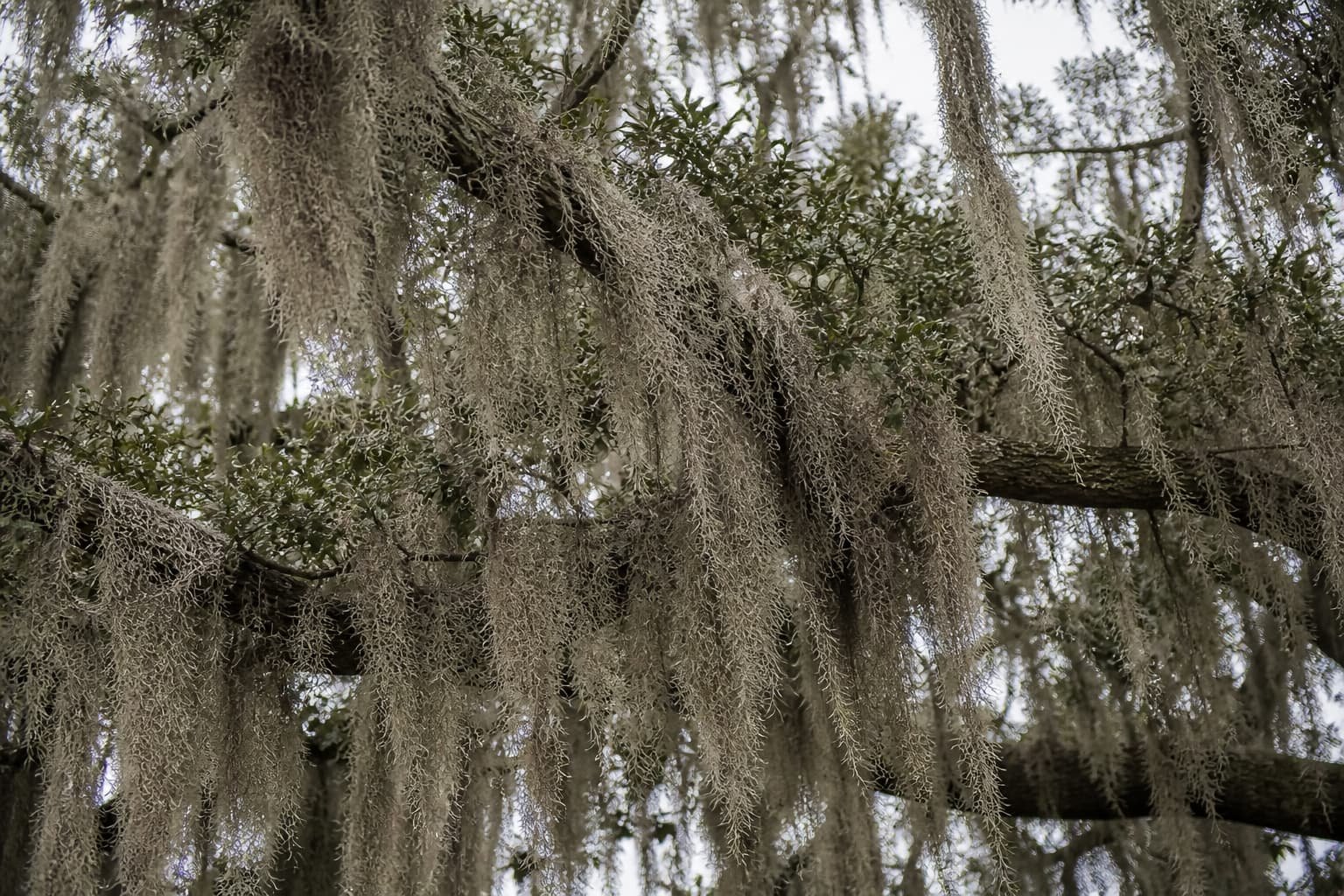
Spanish moss trees are one of the most distinctive sights in Gainesville and across north-central Florida. The long, silvery-grey strands draped across live oaks and laurel oaks throughout the city’s residential neighbourhoods, parks, and university campus area are as characteristic of this part of Florida as the trees themselves. But for many Gainesville homeowners, spanish moss trees raise a persistent question — is the moss harming my trees, and should I have it removed?
What Are Spanish Moss Trees?
Spanish moss — Tillandsia usneoides — is not actually a moss at all. It is a flowering plant in the bromeliad family, making it a relative of the pineapple. It is also not a parasite, despite what many people assume. Spanish moss is an epiphyte, meaning it uses the tree purely for physical support. It does not penetrate the bark, draw nutrients from the tree’s vascular system, or extract water from the tree’s tissue. Instead, it absorbs everything it needs — water, nutrients, and minerals — directly from the air and rain around it.
Spanish moss trees thrive in the warm, humid conditions found across the southeastern United States, and Gainesville’s climate is close to ideal. The city’s high humidity, frequent rainfall, and abundance of large hardwood trees create conditions in which Spanish moss establishes and spreads readily. Live oaks and laurel oaks provide the horizontal branching structure that the plant favours, giving it plenty of surface area to colonise.
Do Spanish Moss Trees Suffer Any Harm?
The straightforward answer is that Spanish moss does not directly harm a healthy tree. Because it is not a parasite, it does not take anything from the tree it grows on. A live oak or laurel oak carrying a heavy load of Spanish moss is not being drained of nutrients or weakened by the moss itself.
However, Spanish moss trees can experience indirect problems under certain conditions. Very heavy coverage can reduce the amount of sunlight reaching the tree’s inner canopy and smaller branches. In a tree that is already stressed — by drought, root damage, disease, or age — reduced light penetration can slow recovery and contribute to further decline. This is a secondary effect rather than a direct one, but it is worth being aware of on Spanish moss trees that are already showing signs of poor health.
Weight is another consideration. Dense Spanish moss absorbs significant amounts of water during and after rainfall, adding considerable weight to the branches it grows on. During high winds — particularly during tropical storms and hurricanes — this additional weight increases the load on branches already under stress. On older Spanish moss trees with heavy coverage and pre-existing structural weaknesses, this can be a contributing factor in branch failure during storm events.
When Should Spanish Moss Be Removed?
Routine removal of Spanish moss from otherwise healthy Spanish moss trees is generally not necessary. The moss is part of Gainesville’s natural ecosystem, providing habitat for birds and small wildlife, and its presence on healthy trees is not a cause for concern. Removing it unnecessarily disrupts that habitat without providing meaningful benefit to the tree.
There are situations, however, where thinning or partial removal is worthwhile. If a tree is already stressed or in decline, reducing moss coverage can improve light penetration and reduce the weight load on compromised branches. Before hurricane season, thinning heavy moss on large Spanish moss trees — particularly on branches already showing signs of weakness — is a sensible precautionary measure. And on trees where moss coverage has become so dense that it obscures your view of the canopy structure, removal can help you and your arborist assess the actual condition of the branches beneath.
Spanish Moss Trees and Gainesville’s Urban Canopy
Gainesville’s urban tree canopy is one of the city’s defining characteristics, and Spanish moss trees are a central part of that canopy’s visual identity. The University of Florida campus and the adjacent residential neighbourhoods are particularly noted for their mature live oaks draped in Spanish moss — a landscape that takes decades to develop and that the city’s canopy ordinance works to protect.
Tree Care Gainesville assesses Spanish moss coverage as part of every trimming visit. Where moss has become excessive — particularly on older or structurally compromised trees — we thin it as part of the overall tree maintenance work. We do not advocate for blanket removal of Spanish moss from healthy trees, and we are happy to discuss the specific conditions on your property and advise on whether any intervention is warranted.
Chiggers and Spanish Moss Trees — A Common Misconception
One of the most persistent myths about Spanish moss trees is that the moss is full of chiggers and should not be touched. In practice, Spanish moss growing on trees — particularly in the upper canopy — is unlikely to harbour significant chigger populations. Chiggers live in soil and low vegetation, not in tree canopies. Spanish moss that has fallen to the ground and is lying in leaf litter or damp soil is a different matter, and handling fallen moss with bare hands is best avoided. But the moss growing on your trees is not a chigger nest, and this concern should not drive decisions about whether to remove it.
For further information on tree health and best practice arboricultural standards, visit the International Society of Arboriculture.