Once a tree has been removed, the stump left behind is more than just an eyesore. In Florida’s warm, humid climate, an untreated stump can become a breeding ground for pests, a source of fungal spread, and an ongoing obstacle in your yard. Tree Care Gainesville provides professional stump grinding for residential and commercial properties across Gainesville, removing stumps of any size cleanly and efficiently.
Why Remove a Stump?
Leaving a stump in the ground after tree removal creates several problems that tend to get worse over time. As the stump begins to decay, it attracts wood-boring insects including termites and carpenter ants. In a state where subterranean termite activity is among the highest in the country, having decaying wood in your yard close to your home is a risk worth taking seriously.
Fungal growth is another concern. Stumps from Florida native species such as sweet gum and slash pine can develop root rot fungi that spread through the soil to neighbouring healthy trees. If the removed tree was showing signs of fungal disease prior to removal, grinding the stump promptly reduces the risk of that disease establishing in the surrounding soil.
From a practical standpoint, stumps are a tripping hazard, a lawn mowing obstacle, and an obstacle to any landscaping or construction work you may want to carry out. Grinding removes the problem entirely, leaving the area ready for replanting, turfing, or any other use you have in mind.
How Stump Grinding Works
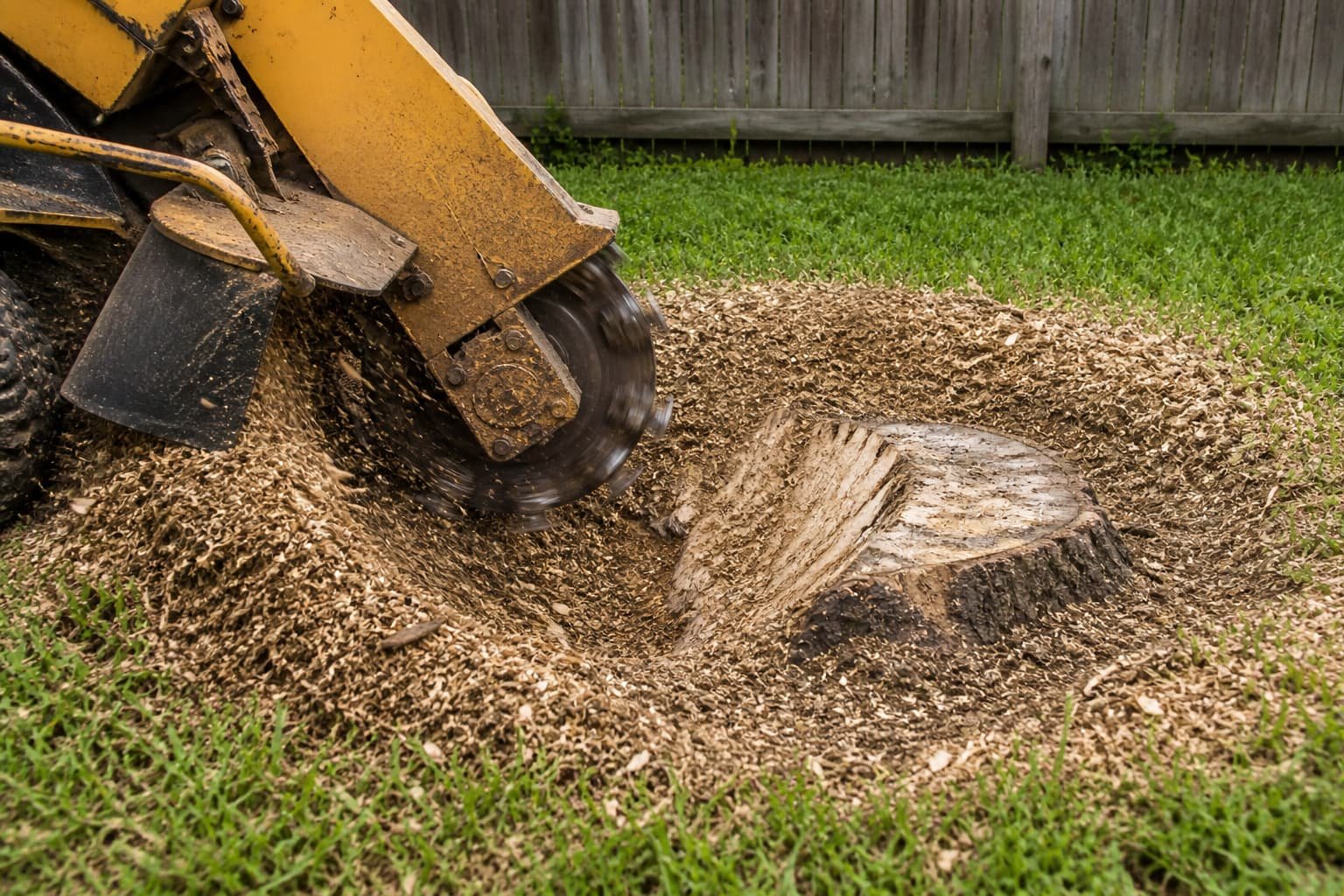
Stump grinding uses a rotating cutting wheel to chip the stump and surface roots down to below ground level. The process produces a large volume of wood chip mulch, which can be left in place to fill the void left by the stump, used elsewhere in your garden, or removed from the site entirely — your choice.
The depth to which we grind depends on your plans for the area. If you intend to replant or lay turf over the spot, we grind deeper to ensure the remaining root material will not interfere with new growth. For areas that will be paved or built on, we discuss the appropriate depth with you before starting work.
Stump grinding does not remove the lateral roots that spread out from the stump through the soil. In most cases these roots will decay naturally over time, but if you are planning construction work in the area it is worth discussing root extent with us during the assessment.
Florida’s Sandy Soils and Stump Decay
Gainesville’s sandy soils actually accelerate stump decay compared to heavier clay soils found elsewhere. The combination of good drainage, warm temperatures, and high humidity creates conditions in which wood-decaying fungi establish quickly. While this means stumps do break down faster here than in cooler climates, the decay process still takes years, and the associated pest and fungal risks are present throughout that period.
For slash pine and sweet gum stumps in particular, we recommend grinding promptly after removal. Both species are prone to producing vigorous stump sprouts — new shoots that grow from the remaining root system and can become a persistent maintenance problem if left unchecked. Grinding the stump eliminates the energy source for these sprouts.
Stump Grinding as Part of a Full Removal Job
Stump grinding is available as a standalone service for stumps left by previous tree work, or as an add-on to any tree removal job carried out by Tree Care Gainesville. If you are having a tree removed and want the stump dealt with at the same time, let us know when you book — we bring the grinding equipment on the same visit and complete the job in one trip.
For properties with multiple stumps — common after storm damage has resulted in several removals across the same site — we can assess and quote for all stumps at once, which is generally more cost-effective than booking separate visits.
Serving Gainesville and Surrounding Areas
Tree Care Gainesville provides stump grinding services across Gainesville and the surrounding region, including Newberry, Starke, Lake City, Palatka, and Ocala. For further information on tree care best practices, visit the International Society of Arboriculture.