Hurricane tree damage is a serious and recurring risk for homeowners across Gainesville and Alachua County. Every year between June and November, the Atlantic hurricane season brings tropical storms and hurricanes that push damaging winds, heavy rain, and flying debris deep into north-central Florida. Understanding how hurricane tree damage affects your trees — and what you can do to reduce the risk — is one of the most practical steps you can take to protect your home and family.
How Hurricane Tree Damage Happens
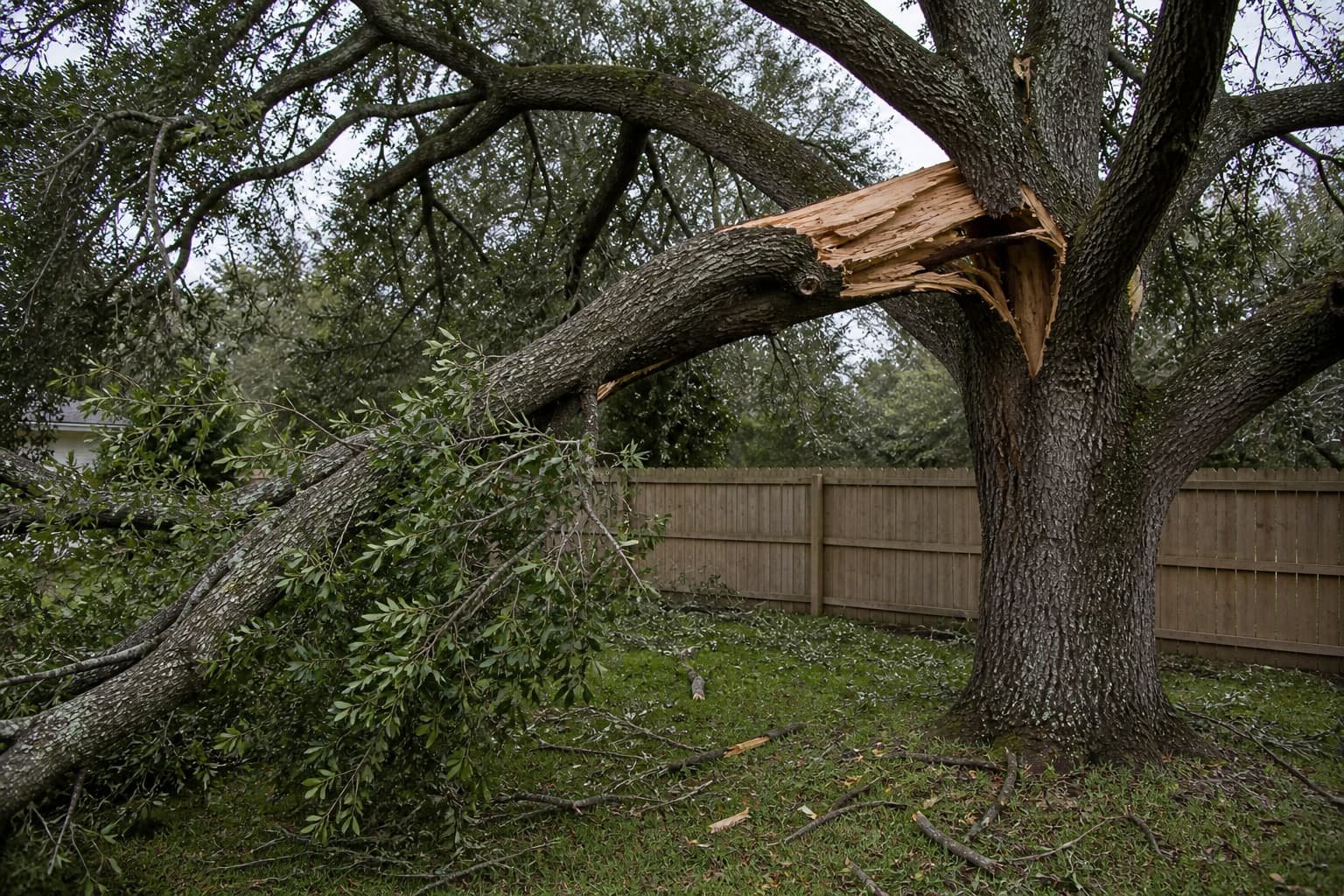
Hurricane tree damage in Gainesville takes several forms. The most obvious is physical breakage — branches snapping under wind load, major limbs tearing from the trunk, or the entire tree uprooting and falling. But storm damage to trees goes beyond what is immediately visible. Trees that survive a storm event without obvious breakage can still sustain significant damage that affects their long-term health and structural integrity.
High winds place enormous stress on a tree’s root system. Even when a tree does not uproot completely, the root plate can shift slightly during a storm — breaking fine feeder roots, cracking the root collar, and creating conditions that allow fungal and bacterial pathogens to enter the root system. A tree that looks intact after a storm may have a compromised root system that will cause it to decline over the following months or years.
Flooding associated with tropical rainfall is another significant factor. North-central Florida’s sandy soils drain reasonably well under normal conditions, but sustained heavy rainfall from a slow-moving tropical system can saturate the soil for extended periods. Prolonged root saturation starves roots of oxygen, weakening the root system and making the tree more susceptible to secondary infections and windthrow in subsequent storms.
Which Trees Are Most Vulnerable to Hurricane Tree Damage
Not all trees respond the same way to hurricane-force winds. In Gainesville’s residential areas, the trees most commonly affected by hurricane tree damage include laurel oak, sweet gum, and older slash pine. Laurel oak, while one of Gainesville’s most common street and yard trees, is relatively brittle compared to live oak and tends to lose major limbs in high winds. Sweet gum is prone to uprooting in saturated soils due to its relatively shallow root system. Slash pine, common on the edges of residential lots and in areas that were previously pine flatwoods, is susceptible to snapping at the trunk rather than losing individual limbs — making a failed slash pine particularly hazardous.
Live oak is generally considered one of Florida’s most wind-resistant native trees. Its low, spreading canopy and strong wood make it better adapted to hurricane conditions than many other species. However, even live oaks can sustain significant hurricane tree damage if they have pre-existing structural weaknesses — cavities, included bark at major branch unions, or root damage from construction or soil disturbance.
Pre-Season Preparation to Prevent Hurricane Tree Damage
The most effective way to reduce hurricane tree damage on your Gainesville property is to prepare before the season begins. A professional tree assessment in late spring — before the June start of hurricane season — gives you the opportunity to identify and address vulnerabilities before a storm puts your trees under pressure.
Storm clearance pruning is one of the most valuable pre-season measures. Thinning the canopy of large trees reduces wind resistance, allowing air to pass through rather than pushing against a solid wall of foliage. This significantly reduces the load on the root system and the risk of the tree tipping or losing major limbs. Removing dead or dying branches before a storm means they cannot become airborne projectiles during high winds.
Trees with structural defects — splits, included bark, significant lean, or visible decay — should be assessed by a professional arborist before hurricane season. In some cases, structural support systems such as cabling can extend the life of a tree that would otherwise need to be removed. In others, early removal is the safer and more cost-effective option compared to emergency removal after a storm failure.
What to Do After Hurricane Tree Damage Occurs
After a tropical storm or hurricane passes through Gainesville, do a careful walk of your property before approaching any damaged trees. Look for hanging limbs overhead — what arborists call widow makers — before walking beneath any storm-damaged trees. If a fallen tree or limb has contacted power lines, stay well clear and contact your utility provider before doing anything else.
Hurricane tree damage that involves a tree on your roof, blocking a driveway, or presenting an immediate hazard should be treated as an emergency. Call Tree Care Gainesville at (352) 703-5747 and we will respond as quickly as conditions allow. For damage that is significant but not immediately dangerous, we recommend having the tree professionally assessed before attempting any work.
The Long-Term Effect of Hurricane Tree Damage
Hurricane tree damage does not always resolve itself after the immediate debris is cleared. Trees that have lost significant canopy in a storm are under stress, and that stress makes them more vulnerable to pest infestation and disease. Freshly broken wood is an entry point for wood-boring insects and fungal pathogens. Trees that have experienced root disturbance during a storm may show delayed decline — appearing to recover initially before deteriorating over the following growing season.
After any significant storm event, Tree Care Gainesville recommends a follow-up assessment of any trees on your property that sustained hurricane tree damage. Identifying secondary issues early is always preferable to dealing with a failing tree after the fact. For more information on storm damage assessment and tree care standards, visit the International Society of Arboriculture.